 Welcome to ATP Education
 ATP Education
Chapter-6. Life Processes Science class 10 in english Medium CBSE Notes
CBSE Class 10 Science Notes in English Medium based on latest NCERT syllabus, covering definitions, diagrams, formulas, and exam-oriented explanations.

6. Life Processes
Respiration
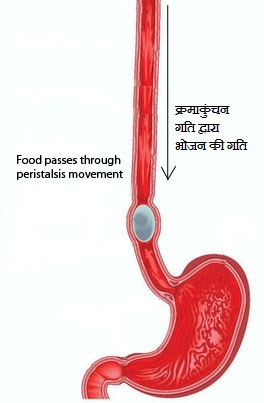
Peristalsis Movement: The movement of the alimentary canal that helps food move from one part of the alimentary canal to another is called peristalsis movement.
Respiration:
During the process of nutrition, we consume food materials. The energy obtained from these food materials is used by the cells. Living organisms use this energy for various life processes.
(1) Cellular Respiration: The breakdown of food in cells to produce energy is called cellular respiration.
(2) Breathing: Breathing is the process that takes place in the lungs, in which an organism takes in oxygen and releases carbon dioxide.
Energy for Various Life Processes:
Cells obtain energy for various life processes through cellular respiration. Different organisms obtain energy by different methods.
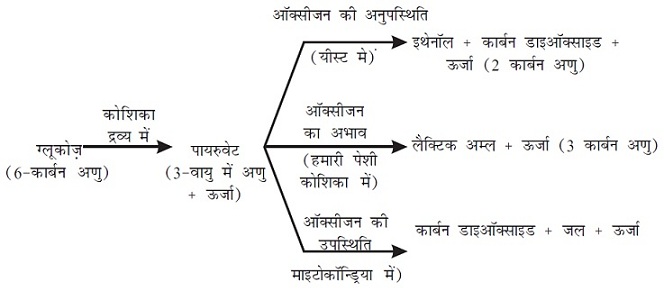
(i) In the Absence of Oxygen: Some organisms such as yeast obtain energy through the process of fermentation.
The flow of this process is as follows:
6-carbon glucose ⇒ breaks down into a 3-carbon molecule called pyruvate ⇒ ethanol, carbon dioxide and energy are released.
Since this process takes place in the absence of oxygen, it is called anaerobic respiration.
(ii) In the Deficiency of Oxygen: During excessive exercise or heavy physical work, there may be a deficiency of oxygen in our muscles. This occurs when the supply of oxygen is less than the demand of the body.
The flow of this process is as follows:
6-carbon glucose ⇒ breaks down into a 3-carbon molecule called pyruvate ⇒ lactic acid and energy are released.
(iii) In the Presence of Oxygen: This process takes place in the mitochondria of our cells in the presence of oxygen.
The flow of this process is as follows:
6-carbon glucose ⇒ breaks down into a 3-carbon molecule called pyruvate ⇒ carbon dioxide, water and a large amount of energy are released.
Since this process takes place in the presence of oxygen, it is called aerobic respiration.
Flow Diagram of the Breakdown of Glucose through Different Pathways:
Aerobic Respiration: The process of glucose breakdown that takes place in the presence of oxygen is called aerobic respiration.
Anaerobic Respiration: The process of glucose breakdown that takes place in the absence of oxygen is called anaerobic respiration.
Difference Between Aerobic and Anaerobic Respiration:
Anaerobic Respiration
1. It produces 2 ATP molecules of energy.
2. This process takes place in the cytoplasm of the cell.
3. It occurs in lower organisms such as yeast cells.
4. This type of respiration takes place in the absence of oxygen.
5. Along with energy, ethanol and carbon dioxide are released.
Aerobic Respiration:
1. It produces a large amount of ATP energy.
2. This process takes place in the mitochondria.
3. It is found in higher organisms.
4. This type of respiration takes place in the presence of oxygen.
5. Along with energy, carbon dioxide and water are released.
Utilization of Energy: The energy released during cellular respiration is immediately used for the synthesis of a molecule called ATP, which acts as fuel for other activities of the cell.
(i) The breakdown of ATP releases a certain amount of energy, which drives the endothermic reactions occurring inside the cell.
(ii) This energy is also used by the body to synthesize various complex molecules, including proteins. The synthesis of proteins helps in the formation of new cells in the body.
(iii) ATP is also used for muscle contraction, transmission of nerve impulses and many other activities.
Essential Requirements for Aerobic Respiration in Aerobic Organisms:
(i) They should take in sufficient amounts of oxygen.
(ii) Respiratory cells should be in contact with air.
Difference Between Respiration and Breathing:
Respiration:
1. It is a complex biochemical process in which digested food is oxidized.
2. This process takes place in the mitochondria.
3. Energy is produced during this process.
Breathing:
1. The process of taking in oxygen and giving out carbon dioxide is called breathing.
2. This process takes place in the lungs.
3. Energy is not produced by breathing. It oxygenates the blood and removes carbon dioxide from it.
Diffusion: The exchange of certain gases through cell membranes is called diffusion.
Direction of Diffusion in Plants:
The direction of diffusion depends on environmental conditions and the requirements of the plant.
(i) Plants Respire at Night: When photosynthesis does not take place, plants release carbon dioxide and take in oxygen.
(ii) Plants Carry Out Photosynthesis During the Day: The carbon dioxide released during respiration is used in photosynthesis; therefore, no carbon dioxide is released. At this time, the release of oxygen is the main event.
Respiratory Rate Increases During Vigorous Exercise:
During vigorous exercise, the breathing rate increases because the rate of respiration in the cells increases due to strenuous exercise, resulting in greater energy consumption. The demand for oxygen by the cells increases and more carbon dioxide is produced, causing the breathing rate to increase.
See other Sub-topics of this chapter:
Class 10, all subjects CBSE Notes in english medium, cbse class 10 Science notes, class 10 Science notes english medium, cbse 10 Science cbse notes, class 10 Science revision notes, cbse class 10 Science study material, ncert class 10 science notes pdf, class 10 science exam preparation, cbse class 10 physics chemistry biology notes